Thursday, May 7, 2015

Blah and Nothingness- Fibro and Depression

I have been struggling with depression all of my adult life. It can be difficult at times to relate to people that have never experienced depression because it's so hard to remember a time when I didn't feel that weight of depression in my life.

Almost two years ago I came across this post about depression by Allie on her blog Hyperbole and a Half. [Warning: If you are offended by certain words commonly used as curse words in our modern language, do not read it]  Her posts always include purposely bad drawings and often tell some sort of story.

As I was reading this post on depression, I couldn't help giggling... and laughing... and more giggling... and laughing so hard I cried.

Now, you may think this is strange... laughing... about a blog... about depression...?


But... here's why! Because in reading this blog on depression, it was as if a little voice inside me kept shouting and getting louder, "Yes, Yes, YES!!! Someone finally found words for all the things that I've been feeling inside!! This is what it's like!!!!" And that little voice felt relief, validation, and a little piece of happy.

Because depression isn't really just sadness. It's like a big blanket of nothingness just slowly creeps into your life until it's too late and you sit there wondering what happened. It's slow, it's sneaky, it's insidious (meaning stealthily treacherous), it's cyclical (you spiral down getting worse because it feeds itself at your expense), it's destructive, it's mind numbing, and it doesn't easily go away. In thinking about it, depression is like zombies.

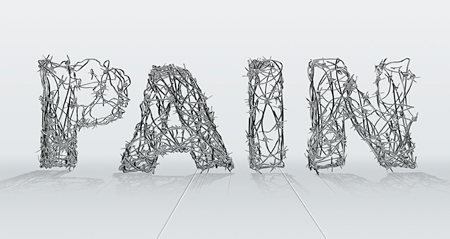
 [You don't want to know how many gross pictures I waded through 
to find this relatively benign and artistic picture. You're welcome.]

Just think about it. Zombies are slow. Zombies are quiet. Zombies sneak up on you and then attack you. Zombies grow by feeding. Zombies are hard to kill because they just keep coming. Zombies don't care about anything except consuming, thereby making more zombies. And, zombies destroy life as you know it. See... depression is zombies!

If you don't like that idea (which, you really should because, hello... zombies!), you can just think of it like a sneak attack in a siege. Before you even know they are there, the enemy has already penetrated your defenses and have put up their own to keep you from casting them out. To make it worse they use a white foggy gas that makes you feel sluggish and difficult to move. The longer it takes to realize they are there, the harder it is to fight them. Before you know it, you have lost half the city and are struggling to keep them out of the rest.


Or, you could put the two together and have zombies doing a sneak attack during a siege in your city. Seriously... perfect! 

If you've never experienced depression before, perhaps the post by Allie and these descriptions and pictures give you some idea of what depression is like. I would like you to understand because it may help you when talking to someone with depression.

There are only two other things I would say as far as description goes. The first is that while some things are universal for everyone with depression, some things vary from person to person. Some may have mild depression and they are able to shake it off with only a little trouble, and some have deep depression, it's a life long struggle, and have given up hope that they will ever feel like a normal person again (if they even remember what that was like). If you really want to know what depression is like for a certain person, go and ask them with genuine compassion. Then, be prepared to listen (without talking) with open ears and heart.


I mentioned at the beginning that depression is a weight. It is. If you've ever read an older allegory called Pilgrim's Progress, you might understand exactly what I mean. If you have not, just imagine carrying a backpack around with you everywhere, and every day that backpack feels heavier and heavier and heavier. This weight is internal, but it is still heavy, weighs you down, and causes everything to be a whole lot more difficult. 

The other thing is that depression is isolating. You often feel alone, that no one wants to be around you, that you don't want to intrude your sad blahness into their happy, and that no one really knows or understands what you are going through.

Whenever I'm around people I try not to be too negative in how I talk about what's going on in my life and how I respond to the inevitable "How are you/How have you been?" I could easily list out all the aches, pains, emotional turmoil, mental difficulties and fatigue... but unless they are my oldest, closest, or dearest friends they likely wouldn't want to be listening too long (and if I only talked about those things, it's unlikely even those would remain my oldest, closest, or dearest friends!) to all my tales of woe. Also, this tends to feel negative to me, and I've learned that the longer I dwell on the negative the harder life feels (and I really don't need life to feel harder!). So, I will give an honest but vague answer to the merely inquisitive, or if I don't have time to get into anything more even to closer friends. Usually it's some variation of "Exhausted but here", "Things are difficult but I'm hanging on", or "Yesterday was rough but today is ok".


If there is one thing I would want those that don't know what it is like to experience depression, and those that have only ever had a mild form, to know is that you can't assume that what works for some people will work for others. You also can't assume that just trying to convince them to have an attitude change will work. Or, that if they consider themselves Christians all they need to do is have more faith.

These ways of thinking can be damaging because in order to think in these ways you are already assuming that on some level a person that is deeply depressed wants to feel that way, because otherwise why haven't they just gotten better by now? Just put a little more effort into it and I'm sure you will feel better! Yeah... that's not really accurate or helpful, and can potentially be damaging for the person you are talking to because now you heap guilt, self doubt, and inadequacy on top of their already mile high pile of tumultuous emotions and internal self flagellation. That's the emotional equivalent of having a person alone in the middle of the ocean, trying to make it to shore with only a small flotation device and then taking their flotation device away. It's just not very nice.


[Side note: Depression is caused by one of two things- chemical imbalances or external/internal pressures. Some that have a mild form of depression that started with external/internal pressures can change their attitude, make other healthy changes in their lives to manage stress, and are able to feel better and get better as a result. Those that start with a chemical imbalance, even if they have a more mild form, can't usually feel better just with those things. Also, even if it starts with external/internal pressures, once they hit a certain level of depression their chemicals automatically go out of balance, and create the beginning of cyclical depression. In this case, the sooner you start treating it and changing things the easier it is to get to a place where you start feeling better. Not easy, but easier. Once depression has cycled several times by either cause, it is difficult to get better by yourself. You need help with medication, counseling, or both, in addition to supplements and other methods.]

I assure you, those that suffer lifelong deep depression don't like it, don't want it, and would give anything to not feel the way they do anymore. They just have tried everything they can think of, and nothing seems to help, or only help for a time. Believe me when I say that you want to believe there is hope for things to be different when you so often feel like there isn't any.


When it comes to having Fibromyalgia, it's very difficult to not feel depressed because fatigue and depression feed off of each other, and fatigue and Fibro go hand in hand. The more tired you are, the more depressed you become and the more tired you end up being. So, depression is a major factor in having Fibromyalgia and in how you feel mentally, emotionally, and physically.

Because Fibro is a condition you have for life, if you have Fibro you will pretty much have depression for life. However, just because you have depression doesn't mean you need to stay in an isolated state of blah nothingness! 

In this post I will talk about some of the things that can help, and some things that are necessary to maintain a state of hope in the midst of foggy fatigue and depression.

Monday, May 4, 2015

New Normal

I struggled for a number of years before I was diagnosed with Fibromyalgia. You can read about this journey here. After I was diagnosed and finally knew what was going on in my body, I still struggled to come to terms with it.

One reason is because Fibro is a lifelong condition. It's possible at some point those in the medical fields will figure out a cause or some way to treat the cause without just masking or treating the symptoms. But, until that point I will have this Fibro condition that won't go away.

Another reason is because Fibro is nebulous, relatively unknown, and invisible.

Invisible because people usually can't just look at you to tell you have it. There isn't a test you can take for it. You know how you feel but you still look the same as you always did to everyone else.


If the Fibro symptoms are relatively mild, you may also still seem the same to everyone. My symptoms have not been mild since my first son was born and since my second son was born in February of this year my symptoms have ramped up even more.

I knew it was likely my symptoms would get worse after child birth ever since I learned that physical trauma was a factor in developing Fibro symptoms. I decided it was worth it, and Connor definitely is!

[Actual picture of our son Connor James]

However, I don't think I will be able to have another child, in large part due to how much more debilitating another childbirth could be, as well as because it's all I can manage now to handle two kids. I don't think I would be able to manage a third. I have had to be very honest with myself through this process and have had to know where my limits are. This is definitely one.

Back to Fibro! It's relatively unknown- both as far as how to diagnose it, treat it, and cure it, as well as in the minds of the general population. Now, it is much better known than it was even 5 years ago. There have even been commercials promoting certain medications to treat it and more and more people have been diagnosed with it. However, compared to other illnesses and conditions, it can often be overlooked and misunderstood.

Fibro is nebulous. Yeah... People don't always know if they have Fibro the way they can with other conditions. You just slowly feel more exhausted, more depressed, and in more and more pain.


Once you are finally diagnosed (since there is no test for it there can be a long waiting period while the doctors run tests and tell you everything you don't have), it is still nebulous because there is no clear cut prescription, no definite list of things to avoid or do to change it. Some things work for most, a few things work for some, other things work for the rest. There are guidelines, suggestions, and possibilities, but you have to try them to see for yourself if they will actually work for you. And so- Nebulous.

So, perhaps you can see some of why I was struggling after learning that I definitely had Fibromyalgia. I was doing what I could to manage my symptoms but I was struggling a bit with my attitude. Some days I was fine, and some days I was... irritable and depressed.


I met with a dear friend for lunch who shared with me her grandmother's struggles with forgetting things and being less able to do things she was previously able to do. She would try to encourage her grandmother when this happened, so when something else was forgotten or not able to be done anymore, she would tell her grandmother, "It's alright. This is just the new normal," and helped her learn to live in the new normal.

This shift in perspective was really helpful and really applicable to having Fibromyalgia! It changes, often for the worse, and then will stay the same until something triggers another change, or gives you a flair up. So, thinking of Fibro this way was a big help!

It's amazing how much of a difference a shift in perspective can be for you. I felt like I could manage things, be less irritable, and practically buoyant compared to how I felt before. I could sit there, take a few breaths when I felt overwhelmed, and just remind myself that everything was ok. Everything didn't suddenly feel wonderful, but in the midst of exhaustion and depression I could still have a tiny piece of happy.


It has still been a struggle, but since that shift in perspective it has been easier. My faith has helped a lot too, which I will share in a later post.

Have you had to make any attitude adjustments?

My Fibro Story

Since Fibromyalgia doesn't have a known cause, it's hard to say where my Fibro story started. However, there was a time I definitely knew something was wrong...

When I was 22, very close to celebrating 23, and away at college I woke up one day and realized I felt like I had never slept at all. I was exhausted. I dragged all through my classes and activities that day until I finally was able to sleep and get rest. Except I woke up the next day again feeling like I hadn't gotten any sleep.


Soon I was falling asleep in class, feeling awful, and struggling to focus on homework and assignments, even to comprehend what I was reading in my textbooks. [That fatigue and fogginess in thinking and concentrating has continued. Some times are worse than others]

After a week of this I knew something was wrong. No amount of sleep changed how I felt. I finally went to the doctors and they took a number of tests. At the end they told me I was perfectly healthy and nothing was wrong. Have you ever wanted to throw a total tantrum but as an adult? So wanted to here! I still felt awful so I knew something was wrong!

There is nothing worse than waking up one day feeling awful and, as time goes on, realizing that your body has betrayed you. If you have never experienced this for some kind of debilitating condition, illness, or disease it is difficult to convey the horror, confusion, and grief this makes you feel.


A few years went by while I met my husband and got married (one of the best decisions of my life!), I started my masters in counseling (also one of the best!), and still- no matter how much sleep I got I felt exhausted. Eventually, after reading online, I figured that I had chronic fatigue. I had a lot of the same symptoms. I still went for tests every so often as things seemed to get worse. The tests still came back saying I was perfectly healthy.

At this point my husband tentatively suggested that perhaps since the tests said nothing was wrong then maybe nothing was wrong? I responded with exploding, responding that I felt awful and it was in no way normal to feel this way. He learned to keep those kind of thoughts to himself. :) I learned to not respond badly when someone asks a logical question, even if it's upsetting.

I worked at an independent bookstore for several years around this time.

 
I learned that one of my co-workers had Fibromyalgia. She would occasionally call out sick the morning of work, need help lifting the boxes, and other little things like that. I remember thinking a little ungraciously the third time in a row I was working and she called out sick, then finding out later that she had been gardening (one of her favorite hobbies) or something a little more physically strenuous.

If I could talk to her now I would tell her, "I soooo get it now! I am so sorry I ever thought anything ungraciously and wish I could have thought to make it easier for you." Because it is hard. It is hard to get out of bed, and hard to resist doing something you love, even knowing you might pay for it later in pain and stiffness.

A couple years later (and a lot of difficult nights and foggy days) we decided we wanted to have kids and I gave birth to our son.

[Actual picture of our newborn son- Reilly Christopher]

Now, my son is wonderful! But the process of birth and recovering afterwards was awful. I was completely wiped out physically from the pain. I was drained mentally and emotionally from fatigue. I developed Post Partum Depression, which kept me in a constant state of stress and emotional distress. Reilly's whole first year is probably the worse year of my life so far because of all this. Reilly himself is the best part of that year!

If you've read my post about what Fibro is, you will have noted that one of the risk factors is physical trauma. I believe that the pain of giving birth ramped everything up. I started having pains in my hands and feet. My arms and legs would tingle periodically in a way that itched and drove me crazy. I had a hard time even walking because it was painful. My hips began giving me trouble. It felt like I was developing Rheumatoid Arthritis in all the major joints and all those in my hands and feet.


 As this year went on, I began feeling trapped in my body and wanted desperately to either have my body work properly and let me feel right, or to not be in my body anymore. Please understand, it isn't that I wanted to die. I was not suicidal. I just didn't want to be in my body anymore because I was so tired (having a newborn didn't help with that!) and so tired of hurting and not knowing why.

After a couple months I was able to go to an RA doctor, and received the orders for another series of tests. However, this time I got a diagnosis back- Fibromyalgia. Finally, after 7 years, I had gotten a doctor that both had the knowledge and took the time to really listen and figure out what was wrong!


It was both relieving and depressing. Relieving because I finally had a definite diagnoses in which everything I was going through made sense! Depressing because I already knew that Fibro was a lifelong condition and there was no cure for how I was feeling- I hadn't wanted that reality.

It took a while to completely come to terms with having Fibromyalgia and how different my life would be with it. More of that in this post.

Sunday, April 19, 2015

What Is Fibromyalgia?

Fibromyalgia (Fibro) is a chronic syndrome, with no definite cause, in which the sufferer experiences heightened pain and stiffness, fatigue, and depression, among other symptoms.

Lets break this down...

Fibromyalgia is a chronic...
Fibro is a condition that doesn't go away. It can get better at times, it can get worse, but once a person develops Fibromyalgia they have it for the rest of their life.

...syndrome...
Fibro is called a syndrome because over the years doctors have noticed certain symptoms grouped together in patients they have seen. Over time this grouping of symptoms became labeled as Fibromyalgia. It is not a disease, an illness, or directly caused by a virus.

...with no definite cause...
There is still no definitive cause for Fibromyalgia. There are things that are the same for some, but no underlying reason is the same for everyone. Here's what they know about the cause in a condensed form:

1. Fibro often runs in families, so genetics could predispose a person to get Fibromyalgia.


2. Epstein Barr virus, hepatitis C and other systemic infections have been linked with Fibro. Chronic infections of certain viruses can trigger Fibromyalgia.
3.  There is some evidence that links Fibro with previous physical and emotional trauma, similar to PTSD. This can include a bad car accident, childbirth, or menopause (a dear woman I love told me her symptoms have been greatly exacerbated by menopause).
4. Fibro has been linked to diseases and illnesses such as Lyme disease, ankylosing spondylitis (an inflammitory disease that causes vertebrae in your spine to fuse together), rheumatoid arthritis, and lupus (an inflammatory disease caused when the immune system attacks its own tissues), all of which indicates there is an autoimmune element to Fibromyalgia.
5. Some believe that a pattern of sleep dysfunction is the root cause for Fibro.
6. Studies have shown that those with Fibro have lower Serotonin (Serotonin helps lower and regulate pain) and 2-3 times higher levels of substance P (increases nerve sensitivity and heightens perception of pain.)


My opinion is that 1-4 are risk factors. The more of them you have the more likely you are to get Fibro at some point, with 5 & 6 having potential as both cause and symptom, perhaps cycling to make Fibro worse as time goes on if nothing mitigates these conditions.

...in which the sufferer experiences heightened pain and stiffness...
After reading the previous paragraph in #6, it isn't a wonder that pain is experienced. Additionally, to get an official diagnoses of Fibro, pain must be present in at least 11 of 18 pain points on the body, and in each quadrant of the body. The pain feels similar at times to Rheumatoid Arthritis, but instead of occurring in the joints, the Fibro pain occurs in the muscles, tendons, and connective tissues. Stiffness in these areas also occurs after remaining in one position for a time, causing additional pain.

...fatigue...
Regardless of whether it is cause or effect or both, sleep patterns play a big part in how people experience Fibromyalgia. Fatigue experienced ranges between mild and overwhelming. Fatigue often contributes to depression and worsens pain symptoms. People with fibromyalgia often have below-normal levels of certain brain chemicals that are essential for proper sleep patterns and a sense of mental well-being: Serotonin, Norepinephrine, and Dopamine.


...and depression...
Depression often occurs in those with Fibro as a result of lowered Serotonin levels in conjunction with interrupted sleep patterns and increased fatigue. Low cortisol levels, poor mitochondrial function, low levels of vitamin D, and hypothyroidism can also contribute to anxiety and depression.

...among other symptoms.
Other symptoms include tension headaches/migraines, Irritable Bowel Syndrome (IBS), TMJ pain, dry irritated eyes, ringing in ears, pelvic pain, skin problems/sensitivities, burning, tingling or numbness in hands and feet, and cognitive difficulties (memory problems, confusion, and difficulty concentrating).

And all of this means that Fibromyalgia is complex, confusing, and difficult to deal with!


Do you feel a little down just reading this? It's not an easy condition to live with, and difficult to not feel slightly depressed when thinking about it! Not everyone has every symptom. However, the fatigue and the pain points are the definitive symptoms of Fibro. You have to have those to receive a diagnoses. I haven't had every symptom of Fibro, but in writing all of these symptoms out I realized that I now do, and some have become pretty bad!

I will share more details about each of these sections, as well as some of the ways I've found to manage it and think about it more positively, in later posts.

Do you know someone with Fibromyalgia, or have you been diagnosed yourself? I'd love to hear more about it!

Disclaimer: Not a doctor!

Why FibroMyNormal?

Why Did I Start This Blog?
Recently I've thought a lot about how more and more often people are telling me they wonder if they have Fibromyalgia, have recently been diagnosed with Fibromyalgia, or know someone else that has Fibromyalgia. Still, not everyone knows what Fibromyalgia (Fibro) is, how it affects your body, or how it affects your life and relationships. So, I thought why not put together a blog sharing about Fibro, my experiences, and perhaps I'll eventually have others contribute as well. :)

Why Choose The Name FibroMyNormal?
Several years ago, a dear friend shared how she encouraged her grandmother, who was struggling with some issues that arise with aging, in thinking about her situation as the new normal and striving to be content where she is in the moment. As she shared this story with me I realized this was a piece I was missing in my thinking about Fibromalgia. Fibro can be an up and down journey with plateaus where you could stay for a few days to a few months.


Rather than remaining frustrated, angry, or discouraged, I just need to remember that this is normal for now. I have more on this here.

Who Am I Writing This Blog For?
I am writing it for me. I'm writing it for you. I'm writing it for your friend that just got diagnosed, or your family member that wonders if they have it. I'm writing for the friend that doesn't really get it, the spouse or significant other that gets frustrated by it, and the child that is affected by it. I'm writing it for anyone and everyone. Some posts will apply more to some than others, but I hope overall that those reading it will be encouraged by this blog.